
 Jennifer Gathman, NP, IBCLC
You Weren’t Meant to Do This Alone
By Jennifer Gathman, NP, IBCLC
Pregnancy and postpartum are moments in early motherhood that few people truly prepare you for. It’s not the moment your baby is born.
It’s not the first night home. It’s the quiet realization, often in the middle of the night, when the house is still, that love and loneliness can exist at the same time.
You can feel overwhelming gratitude for your baby and still wonder why this feels so much harder than you expected. You can be surrounded by people and still feel completely alone.
If you’ve felt this, you are certainly not alone. You’re experiencing what happens when something deeply personal is forced into a dynamic it was never designed for.
Modern Motherhood Is Out of Sync With Human Design
We often talk about maternal resilience as if it’s an individual trait…something you either have or you don’t. But decades of interdisciplinary research across public health, psychology, and anthropology tell a different story: maternal well-being is profoundly shaped by social support.
In fact, studies consistently show that perceived lack of support is one of the strongest predictors of postpartum depression and anxiety. Recent global estimates suggest that nearly 1 in 5 women experience perinatal mood and anxiety disorders, with social isolation acting as a key contributing factor.
At the same time, population-level data indicates that a majority of parents report frequent feelings of loneliness and overwhelm, particularly in the first year postpartum.
This isn’t a coincidence. It’s a structural problem.
The Disappearance of the Village
For most of human history, mothers did not raise children in isolation.
Research describes a model of caregiving known as allomaternal support. This is a system in which multiple individuals, including grandparents, siblings, neighbors, and community members, actively participated in raising children. This wasn’t optional, it was essential for maternal and infant survival.
In these environments:
-
Mothers were rarely alone with the full burden of care
-
Knowledge about infant feeding and development was shared organically
-
Emotional support was embedded into daily life
-
Rest and recovery were protected, not sacrificed
Contrast that with the modern experience:
-
Families often live far from extended support systems. Oftentimes it’s just two parents navigating this alone.
-
Partners return to work quickly, limiting shared caregiving
-
Professional support is fragmented and difficult to navigate
-
Social media creates comparison rather than true connection
The result is a profound mismatch between what mothers biologically and psychologically need and what they are actually receiving.
The Hidden Weight Mothers Carry
One of the most overlooked challenges in early motherhood is not just the physical exhaustion but the cognitive and emotional load.
Mothers today are expected to:
-
Interpret feeding cues and troubleshoot breastfeeding challenges
-
Navigate conflicting medical advice
-
Monitor developmental milestones
-
Make decisions about sleep, nutrition, and health
-
Maintain household responsibilities
-
Often return to work while continuing primary caregiving
All this while also recovering physically, hormonally, and emotionally from childbirth. Research has begun to identify this as a form of “maternal mental load”, and it is strongly associated with increased stress, burnout, and decreased maternal confidence. Even more concerning, many mothers report difficulty expressing their need for help, despite the very clear evidence that support improves outcomes.
This creates a dangerous cycle: Isolation → Overwhelm → Silence → Increased Isolation
Why Support Is Not a Luxury. It’s a Protective Factor!
The presence of meaningful support doesn’t just “help”. It fundamentally changes outcomes.
Evidence from maternal health research shows that:
-
Strong social support is associated with lower rates of postpartum depression and anxiety
-
Peer support groups improve maternal confidence and breastfeeding success
-
Continuity of care and trusted provider relationships increase satisfaction and reduce stress
-
Community-based models of care lead to better maternal and infant health outcomes
In other words, support is not extra. It is essential! It acts as a protective factor which helps in buffering stress, improving mental health, and allowing mothers to adapt more effectively to the transition of parenthood.
Rebuilding the Village in a Modern World
If the traditional village no longer exists in the way it once did, the question becomes: How do we rebuild it?
The answer isn’t to expect mothers to “figure it out” on their own. It’s to create intentional, accessible systems of support that replicate the functions of that village:
-
Trusted, evidence-based guidance
-
Emotional validation and shared experience
-
Practical, hands-on support
-
Connection to community resources
-
Continuity across the prenatal and postpartum period
This is where thoughtful, community-centered care models become critical.
How LoveStrong Wellness Is Bridging the Gap
LoveStrong Wellness was created in response to this exact need. Not as another resource to sift through, but more as a curated, supportive ecosystem designed to make motherhood feel less isolating and more connected. By focusing on both clinical integrity and human connection, LoveStrong Wellness helps mothers access what has slowly become missing in today’s prenatal and postpartum periods:
Trusted, Vetted Professionals
In a landscape where misinformation is common and provider quality varies widely, LoveStrong Wellness prioritizes evidence-based care by connecting families with carefully vetted professionals who specialize in maternal and infant/pediatric health.
The LoveStrong Resource Guide
At the center of this support is the LoveStrong Resource Guide. Our guide is a thoughtfully curated, continuously refined directory of trusted professionals and community resources available to support families through pregnancy, postpartum, and early parenthood.
This is not a generic list.
Each provider and resource included in the guide has been intentionally vetted for quality, expertise, and alignment with evidence-based, compassionate care. The goal is to remove the overwhelming guesswork that so many mothers face when trying to find help.
Instead of spending hours searching, second-guessing, and wondering who to trust, families can access:
-
Professionals who have an additional specialization in maternal and pediatric health.
-
Prenatal and postpartum care providers
-
Mental health professionals with perinatal expertise
-
Pediatric and developmental resources
-
Local community programs and support networks
- Information on various resources to help families find the specific support they need.
All in one place! All with the confidence that they have been carefully selected to truly support you.
Streamlined Access to Resources
Instead of navigating a fragmented system alone, mothers are guided toward relevant, high-quality resources, reducing decision fatigue and increasing confidence. No more aimlessly searching the internet to find resources to fit your specific needs and providers who will support your unique circumstance.
Community Connection
Perhaps most importantly, LoveStrong Wellness helps facilitate meaningful connections between mothers by creating spaces where experiences are shared, normalized, and supported. Because sometimes the most powerful intervention isn’t another piece of advice.
It’s hearing, “Me too.”
You Were Never Supposed to Do This Alone
If motherhood feels heavier than you expected, and let’s be honest….that’s most of us, it doesn’t mean you’re not strong enough. It means you’re carrying something that was never meant to be carried alone. The research is clear. The lived experiences of mothers are clear.
Support changes everything.
Not by removing the challenges of motherhood, but by transforming how those challenges are experienced.
Finding Your Way Back to Support
The village may look different today. It may not be built into your environment. But it can still be built, intentionally, thoughtfully, and with the right support systems in place. And you deserve to be part of a community where you feel cared for, seen, supported, and celebrated. Because motherhood was never meant to be a solitary experience. It was meant to be shared, supported, and held, every step of the way.
pf us have, at some point, considered what we would do if we could travel back in time. Maybe we would give ourselves some hot investment advice and become millionaires, or change history for the better, or witness our favorite historical event.
One year ago, I left San Francisco, sold and gave away everything I owned, and moved into a 40 liter backpack. I traveled to 45 cities in 20 countries, 3 Disneylands, and 1 bunny island. I also worked 50 hours a week building and launching a startup. And my total costs were less than just the rent in San Francisco.

Traveling is not the same as vacation
There’s a growing community of “digital nomads” who live a location independent lifestyle. We’re software developers, designers, writers, journalists, engineers, and all sorts of people who share a passion for the work we do and experiencing the world.
I propose that a nomadic lifestyle is a productive way to build a real company. I’m working hard on bootstrapping an ambitious startup, Moo.do. I’m traveling because it’s cheaper, more productive, and more inspiring than sitting in one place. Traveling is the most responsible choice for the sake of my company, my finances, and my personal growth.
I became a nomad by accident
Three years ago I was preparing to leave my job at Microsoft to move to San Francisco to start a startup. My friend asked me “but why do you need to be in San Francisco when you can work on a computer from anywhere?” His question made a lot of sense. As I thought about it more, I began to question my assumptions about a “normal life” which don’t make sense in our modern world.
I reject the idea of a 9–5 job. I want to explore the world while the sun is out instead of wasting the daylight hours working inside and dreaming of my next vacation.

But it didn’t work out so well.
After traveling for 6 months, I gave up and still moved to San Francisco. Traveling was fun, but I had a great idea and I needed to really focus and get real work done. What better place to build my startup than Silicon Valley?
But I soon found myself becoming too comfortable and slowing down, getting easily bored and distracted, and watching a lot of TV. I sat at my computer for 12 hours a day but didn’t feel like I was productive.
H1: Traveling is cheaper than staying at home
This is my average total monthly spending from one year living in Seattle’s Capitol Hill, one year living in San Francisco’s Upper Haight, one year traveling to 20 countries, and one month at a hotel in Bali. It is much cheaper for me to travel. Since the majority of my costs are from trains and flights, it’s significantly cheaper if I stay in one place.
H2: Traveling makes me more productive
This is my average total monthly spending from one year living in Seattle’s Capitol Hill, one year living in San Francisco’s Upper Haight, one year traveling to 20 countries, and one month at a hotel in Bali. It is much cheaper for me to travel. Since the majority of my costs are from trains and flights, it’s significantly cheaper if I stay in one place.
H3: 9–5 is not optimal
This is my average total monthly spending from one year living in Seattle’s Capitol Hill, one year living in San Francisco’s Upper Haight, one year traveling to 20 countries, and one month at a hotel in Bali. It is much cheaper for me to travel. Since the majority of my costs are from trains and flights, it’s significantly cheaper if I stay in one place.
H4: Traveling expands my cultural bubble
This is my average total monthly spending from one year living in Seattle’s Capitol Hill, one year living in San Francisco’s Upper Haight, one year traveling to 20 countries, and one month at a hotel in Bali. It is much cheaper for me to travel. Since the majority of my costs are from trains and flights, it’s significantly cheaper if I stay in one place.
H5: Traveling is not the same as vacation
This is my average total monthly spending from one year living in Seattle’s Capitol Hill, one year living in San Francisco’s Upper Haight, one year traveling to 20 countries, and one month at a hotel in Bali. It is much cheaper for me to travel. Since the majority of my costs are from trains and flights, it’s significantly cheaper if I stay in one place.
H6: I became a nomad by accident
This is my average total monthly spending from one year living in Seattle’s Capitol Hill, one year living in San Francisco’s Upper Haight, one year traveling to 20 countries, and one month at a hotel in Bali. It is much cheaper for me to travel. Since the majority of my costs are from trains and flights, it’s significantly cheaper if I stay in one place.
Heading H1
Heading H2
Heading H3
Heading H4
Heading H5
Heading H6

Japanese street fashion has made the international news quite a bit this year, but not always for good reasons. From CNN and I-D Magazine to a much shared Quartz article to various unsourced blog posts, the English-speaking internet has been gleeful in declaring Harajuku “dead”. It’s a cliche at this point to dismiss stories as “Fake News”, but modern media feeds on shocking and upsetting headlines to get more clicks. “Harajuku is Dead!” sells far better than the more accurate “Harajuku is Changing”.
I’ve learned that people will forget what you said, people will forget what you did, but people will never forget how you made them feel.
– Maya Angelou

I wasted a lot of time when I worked in an office because of commuting and the massive distraction that is the internet. Now I spread my work throughout the day and take big breaks for exploring. After working for a few hours, I reach a milestone and explore the city until I want to get back to work. Or if I hit a problem I can’t figure out, I walk it off until I’ve solved it. Cycling between fun and work makes my days less exhausting and makes me less prone to burnout.Peco has proven she’s uniquely tuned into the trends that matter most to Harajuku’s youngest generation of girls. If she says that the swinging 60s have arrived, we aren’t going to argue!
For bonus 1960s-inspired Japanese fashion, check these two groovy boutiques:
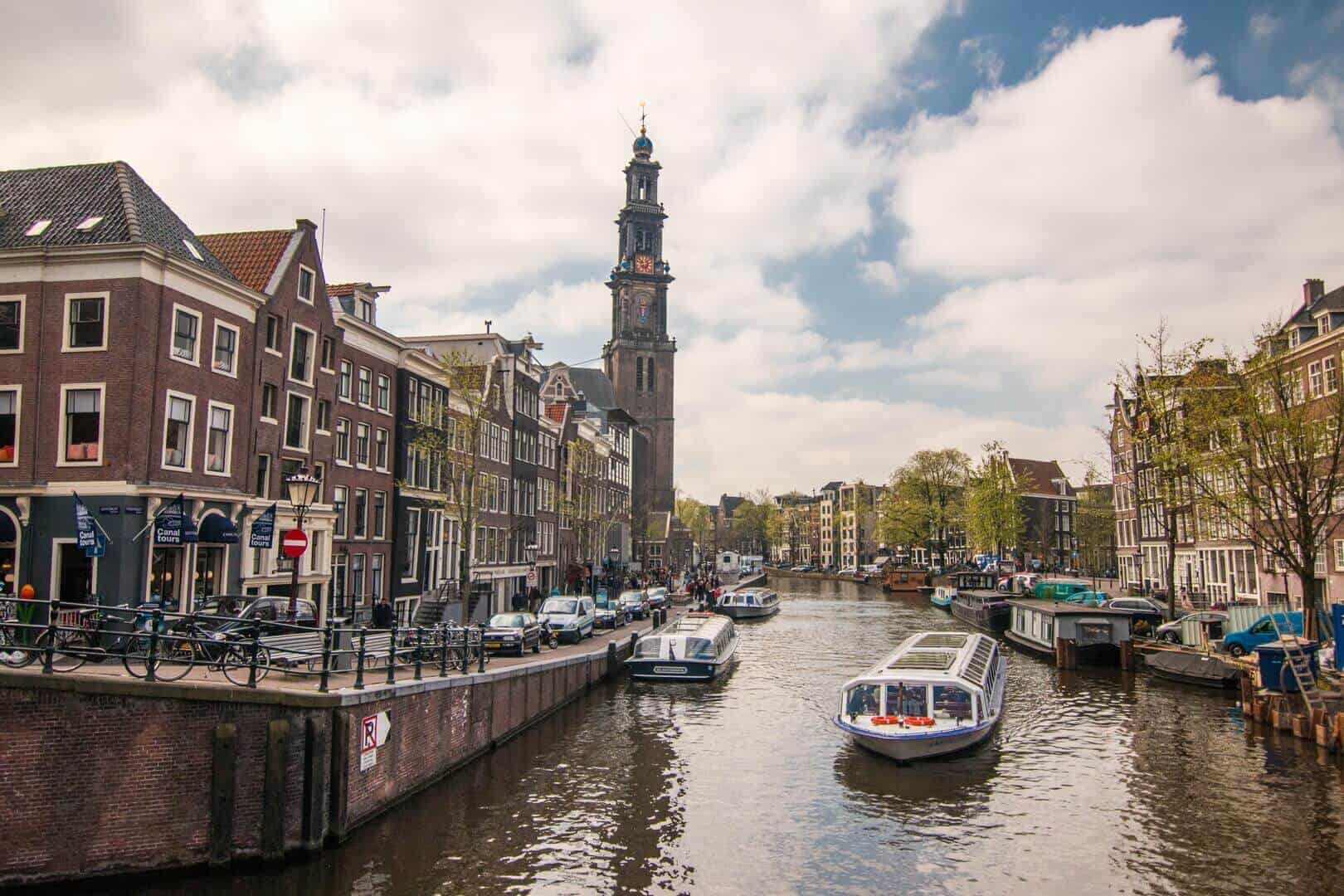
Traveling makes me more productive
When I first started traveling, I was a great tourist, taking pictures of everything and doing all the activities listed in tour guides. After a couple of exhausting weeks it occurred to me that I’m not on vacation. This is my life now. I slowed down and realized that if I have a month to explore a new city, I don’t need to do it all at once. I can explore the city for a few hours and still get a lot of work done.
Your time is limited, so don’t waste it living someone else’s life.
On a trip to New York, my friends went to work during the days, so I went out and worked in coffee shops and in Central Park. Suddenly I was hugely productive, getting much more work done in 6 hours than in my normal 12 hour days. The same thing happened a few months later on a trip to London. I was even coming up with better ideas because the new experiences and surroundings were keeping my mind more active.
| Header 1 | Header 2 | Header 3 | Header 4 |
|---|---|---|---|
| Division 1 | Division 2 | Division 3 | Division 4 |
| Division 1 | Division 2 | Division 3 | Division 4 |
| Division 1 | Division 2 | Division 3 | Division 4 |
| Division 1 | Division 2 | Division 3 | Division 4 |